London Airport Transfers: Your Chill Guide
So, you've touched down in London, perhaps at Heathrow, but your next flight or final destination is actually out of Gatwick, Stansted, or even Luton? Don't fret! Navigating between London's bustling airports might sound like a bit of a marathon, but it's actually a super common scenario and, with a little know-how, it doesn't have to be a stressful dash. We're here to help you get from A to B (or rather, from LHR to LGW, STN, or LTN) with minimal fuss and maximum chill.
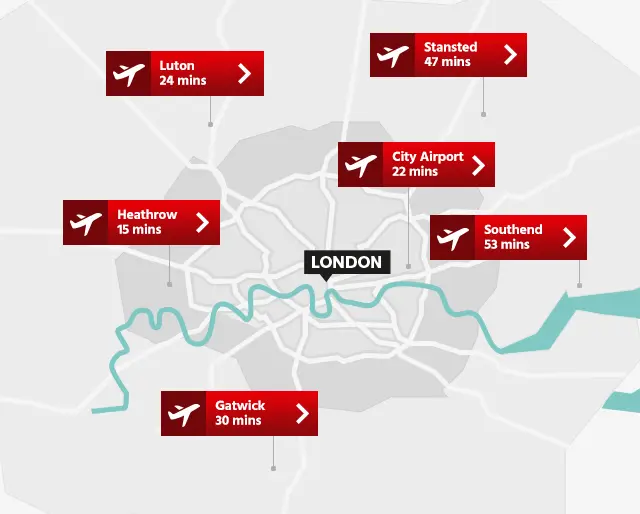 Source www.visitlondon.com
Navigating Luggage and Customs During Your Airport Transfer
Transferring between London's bustling airports can sometimes feel like a mini-adventure in itself, especially when you factor in your luggage and the mysterious world of customs.
Don't worry, we're here to demystify the process and help you glide through like a seasoned pro.
The first thing to remember is whether your bags are 'checked through' to your final destination.
If they are, you'll simply collect them at your final airport.
However, if you're on separate tickets or flying with different airlines, you'll almost certainly need to collect your bags in London.
Once you land, follow the signs for "Baggage Reclaim" or "Arrivals."
After you've scooped up your suitcases from the carousel, you'll head towards customs.
For most international travellers, particularly those from outside the EU, you'll pass through a checkpoint.
It's usually a quick process if you have nothing to declare.
Look for the "Green Channel - Nothing to Declare" if you're good to go.
If you have goods exceeding duty-free allowances or restricted items, head to the "Red Channel - Goods to Declare."
Always be honest and declare what's required to avoid any unnecessary delays or fines.
Once through customs, if you need to re-check your bags for a connecting flight from a different London airport, you'll then need to make your way to your transfer.
Many transfer services offer assistance with luggage, which can be a real lifesaver, especially if you're travelling with multiple bags or family.
It’s always a good idea to pack essentials in your carry-on, just in case of any unforeseen delays with checked luggage.
This way, you'll have everything you need close at hand.
Here’s a quick overview of what to keep in mind regarding common customs declarations for international arrivals into the UK:
| Category | Duty-Free Allowance for Arrivals from Outside UK | Important Notes |
|---|---|---|
| Alcohol (Beer) | 42 litres | Must be for your own use. |
| Alcohol (Wine) | 18 litres (still wine) | This allowance is quite generous for personal consumption. |
| Alcohol (Spirits/Strong Liquor) | 4 litres | Or 9 litres of sparkling wine, fortified wine or other alcoholic drinks up to 22% ABV. |
| Tobacco (Cigarettes) | 200 cigarettes | Or 100 cigarillos, 50 cigars, or 250g of tobacco. |
| Other Goods | Up to £390 worth | This includes perfumes, gifts, electronics, etc. If over, you must declare and pay tax. |
| Cash | £10,000 or more | Must be declared if arriving from outside the UK or leaving the UK to a non-EU country. |
Remember, these are general guidelines and can change, so it's always best to check the official UK government website for the most up-to-date information before you travel.
Having your documents, like your passport and boarding pass, easily accessible will also make the entire process much smoother.
A little preparation goes a long way to ensure a stress-free onward journey.
Best Time to Book Your Airport Transfer
When it comes to sorting out your airport transfer between London's various hubs, timing truly is everything.
You might be wondering if it's better to book months in advance or just wing it on the day.
Let's dive into why planning ahead is almost always the smart move.
Firstly, London is a massive, bustling city, and its airports are some of the busiest in the world.
This means that demand for reliable transfers can be incredibly high, especially during peak travel seasons.
Think summer holidays, Christmas, Easter, and any major events or festivals happening in the capital.
During these times, prices for transfers can surge, and availability can become scarce if you leave it until the last minute.
Booking your transfer as soon as your flights are confirmed is generally the best approach.
Many transfer companies offer better rates for advance bookings, giving you a chance to compare options and secure a competitive price.
Plus, you'll have a wider choice of vehicles, from standard cars to larger minivans, ensuring you get exactly what you need for your group and luggage.
Another crucial factor is peace of mind.
Having your transfer booked and confirmed well in advance means one less thing to worry about on your travel day.
You'll know exactly who's picking you up, where, and when, allowing you to relax and focus on enjoying your journey.
Trying to arrange a transfer upon arrival, particularly after a long flight, can be stressful.
You might encounter long queues for taxis, confusion over public transport routes, or even inflated prices from opportunistic drivers.
If your travel plans are a bit fluid, look for transfer services that offer free cancellation or amendments up to a certain point.
This provides flexibility while still allowing you to lock in a good price early on.
Even if you're not travelling during a conventional peak season, remember that unexpected events, traffic disruptions, or even local school holidays can impact transfer availability and journey times.
Booking ahead simply mitigates these risks, offering a smoother, more predictable experience.
So, our golden rule? Don't delay.
Secure your London airport transfer as soon as your travel dates are set, and enjoy a much calmer start to your UK adventure.
Beyond the Transfer: Making the Most of Your Layover
Sometimes, the gap between your arrival at one London airport and departure from another is more than just a quick dash across the city.
If you've got a longer layover, say four hours or more after factoring in travel time between airports and security checks, you might be wondering how to make the most of that extra time.
This isn't just about killing time; it's an opportunity to relax, recharge, or even sneak in a mini-adventure.
For layovers that are genuinely lengthy (think 6-8+ hours), you might consider venturing outside the airport.
Heathrow, for example, has excellent connections to Central London via the Heathrow Express or Elizabeth Line, making it feasible to pop into the city for a quick meal or a walk past a famous landmark like Buckingham Palace or Big Ben.
Just be meticulously organised with your timing and ensure you have plenty of buffer to get back to the correct airport for your next flight.
Gatwick also offers train services into London Victoria, and Stansted has the Stansted Express to Liverpool Street.
However, for most transfers between different London airports, especially if your layover isn't a full day, staying within or very close to the airports is often the most sensible and stress-free option.
Many London airports boast fantastic facilities that go far beyond just duty-free shops.
You can find comfortable airport lounges – some accessible with certain credit cards or airline status, others available for a pay-per-entry fee – offering quiet spaces, complimentary food and drink, Wi-Fi, and even shower facilities.
These can be an absolute godsend for refreshing yourself after a long flight.
Alternatively, explore the various dining options, from quick cafes to sit-down restaurants, or indulge in some retail therapy.
Many airports also have hotels either within their terminals or just a short shuttle bus ride away.
If you have a particularly long layover (10+ hours), booking a day room at one of these airport hotels can be a brilliant way to catch up on sleep, shower, and truly refresh before your next leg.
This avoids the rush and stress of going into the city and back.
Whatever you decide, make sure you have a clear plan, factor in security queues and potential delays, and set multiple alarms if you're planning on resting.
A well-managed layover can actually enhance your travel experience, making your entire journey feel less arduous.
Cost-Saving Tips for London Airport Transfers
Let's be honest, travel expenses can quickly add up, and airport transfers are often a significant chunk of that budget.
But transferring between London airports doesn't have to break the bank.
With a little bit of savvy planning, you can significantly reduce the cost of getting from one terminal to another.
One of the best ways to save money is to book your transfer in advance.
As we mentioned earlier, last-minute bookings often come with premium prices, especially if you're hailing a black cab or ordering a ride-sharing service on the spot during peak times.
Many private transfer companies offer better rates for bookings made days or even weeks ahead, so start looking early.
Consider sharing your transfer if you're travelling alone or as a couple.
Some companies offer shared shuttle services that pick up multiple passengers heading in the same direction.
This can be significantly cheaper than a private car, though it might take a little longer due to multiple stops.
If you're comfortable with public transport, this is often the most cost-effective solution.
London has an extensive network of trains and buses connecting its airports.
For instance, the Elizabeth Line connects Heathrow to Central London and then onto Stratford for connections to Stansted, while Gatwick and Stansted have dedicated express train services.
Buses, though slower, are generally the cheapest option.
Investigate Oyster cards or contactless payment options for public transport, as these are usually cheaper than buying single paper tickets.
However, weigh the cost savings against the convenience and time factors, especially if you have a lot of luggage or a tight schedule.
For families or groups, sometimes a private transfer booked in advance can work out similarly priced per person to public transport, especially if you consider the ease and door-to-door service.
Always get a few quotes from different reputable transfer providers to compare prices.
Be wary of unusually low prices, as they might indicate hidden costs or unreliable service.
Ensure the quoted price includes all potential charges, like waiting time, parking fees, and child seats, if needed.
Finally, travel light where possible.
Some transfer services might charge extra for excessive luggage, so sticking to airline allowances can save you a few quid.
A little research and foresight can go a long way in making your London airport transfer both efficient and budget-friendly.
FAQs About London Airport Transfers
Got questions about hopping between London's airports? You're not alone!
It can be a bit confusing, but we've got answers to the most common queries to help you navigate with confidence.
Here are 15 frequently asked questions to clear things up:
Q1: How long does it typically take to transfer between London airports?
A: Journey times vary greatly depending on the airports, time of day, and traffic conditions. For example, Heathrow to Gatwick can take anywhere from 60 to 90 minutes by car, while Heathrow to Stansted might be 90 to 120 minutes. Always factor in extra time for potential delays.
Q2: What are the main ways to transfer between London airports?
A: You can use private car transfers, taxis, coaches (like National Express), trains (e.g., Heathrow Express, Gatwick Express, Elizabeth Line), or a combination of public transport options.
Q3: Which is the fastest way to get from Heathrow to Gatwick?
A: The fastest way is often a pre-booked private transfer or taxi, followed closely by the dedicated coach services. Public train routes require changes, adding to the journey time.
Q4: Do I need a visa to transfer between London airports?
A: If your onward flight is from a different airport, you will typically need to clear UK immigration, meaning you'll need a visa if your nationality requires one to enter the UK.
Q5: What if my flight is delayed and I miss my pre-booked transfer?
A: Most reputable transfer companies monitor flight arrivals and will adjust pickup times accordingly. It's crucial to provide your flight number when booking. Contact them immediately if you anticipate a significant delay.
Q6: Can I use an Oyster card for transfers between all London airports?
A: An Oyster card works on most public transport within London, including Tube and train services to Heathrow and Gatwick. However, dedicated express services like the Gatwick Express require separate tickets, and it won't cover coach services to airports like Stansted or Luton.
Q7: How much luggage can I take on an airport transfer?
A: This depends on the type of transfer. Private cars generally accommodate 2-3 large suitcases, while larger minivans can take more. Coaches have generous luggage allowances, similar to airlines. Always check with your chosen provider when booking.
Q8: Is it cheaper to book a transfer in advance or on arrival?
A: It is almost always cheaper and more reliable to book your transfer in advance, especially for private cars. On-the-spot bookings can be more expensive and might have limited availability.
Q9: Are there any direct train connections between London airports?
A: No, there are no direct train connections between any two London airports. All rail journeys require at least one change, usually in central London or a major hub like Reading.
Q10: What are typical transfer costs?
A: Costs vary widely. Public transport can range from £10-£30 per person, coaches £20-£40, and private transfers £60-£150+, depending on distance, vehicle size, and time of day.
Q11: Should I allow extra time for security checks when transferring?
A: Absolutely. You will go through security again at your departure airport. Always factor in generous time for check-in and security, especially during peak travel times.
Q12: Can I get a taxi directly from one airport to another?
A: Yes, black cabs are available at all London airports. However, they can be very expensive, especially for longer distances like Heathrow to Stansted, and fares are metered.
Q13: Are child seats provided for transfers?
A: Many private transfer companies offer child seats upon request, sometimes for an additional fee. It's essential to specify your needs when booking.
Q14: What's the best way to get from Heathrow to Luton?
A: A pre-booked private transfer or coach service is often the most straightforward. Public transport involves multiple changes, typically via central London, which can be time-consuming.
Q15: What should I do if I have a very early or late flight for my transfer?
A: Pre-booking a private transfer is highly recommended for very early or late flights when public transport options may be limited or less frequent, ensuring a reliable and safe journey.
Safe Travels!
So there you have it, hopefully, this guide has made your London airport transfer a little less daunting and a lot more straightforward. We know getting between Heathrow, Gatwick, Stansted, Luton, and London City can seem like a bit of a marathon, but with a bit of planning (and maybe a good podcast!), it's totally doable. Thanks so much for stopping by and reading – we really appreciate you taking the time! Do swing by again next time you're planning an adventure or just curious about something travel-related. We're always here to help you navigate the wonderful, sometimes wacky, world of travel. Cheers for now!