Catch Some Air: Skydiving Fun Near Phoenix, AZ
Thinking about doing something truly unforgettable while you're in the Phoenix area? Forget another hike up Camelback or a day by the pool – we're talking about jumping out of a perfectly good airplane! Skydiving near Phoenix offers an incredible rush, not to mention breathtaking views of the desert landscape from thousands of feet up. It's an experience that’s surprisingly accessible, ridiculously thrilling, and guaranteed to give you stories for years to come.
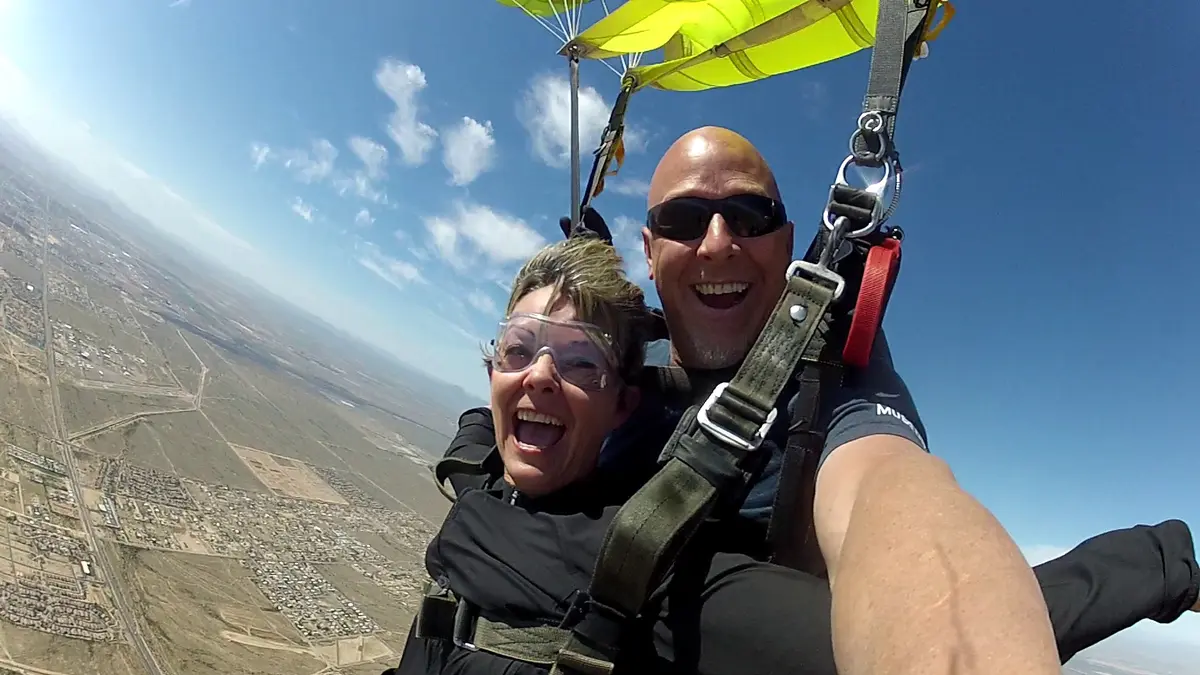 Source phoenixskydivecenter.com
Choosing the Right Skydiving Center Near Phoenix
This is crucial for an unforgettable and safe experience.
When you're dreaming of soaring above the Arizona desert, you want to make sure you pick a dropzone that truly excels. It’s not just about finding the closest one; it’s about finding the best one for you.
Consider factors like their safety record and the experience of their instructors.
A highly reputable center will have certified professionals who have completed thousands of jumps. They prioritize your well-being above everything else, ensuring all equipment is meticulously maintained and inspected regularly.
Look at online reviews and testimonials from previous jumpers.
What do people say about their customer service, the training process, and the overall atmosphere? A positive vibe and friendly staff can really enhance your pre-jump jitters and post-jump elation.
Another significant aspect is the type of jump offered.
Most first-timers opt for a tandem skydive, where you're securely harnessed to an experienced instructor. Some centers might offer different altitude options, giving you more freefall time for a slightly higher price, which is worth considering for that ultimate thrill.
Finally, think about the facilities.
Is there a comfortable spectator area for friends and family? Do they offer video and photo packages to capture your incredible adventure? These little extras can make a huge difference in reliving and sharing your once-in-a-lifetime jump.
Let’s look at some key comparison points for skydiving centers:
| Feature | What to Look For | Why it Matters |
|---|---|---|
| Instructor Certification & Experience | USPA-certified, thousands of jumps, clear safety record. | Ensures professional guidance and highest safety standards. Your life is literally in their hands! |
| Equipment Quality & Maintenance | Modern gear, regularly inspected, well-maintained aircraft. | Reliable equipment is fundamental for a safe and smooth jump. Older gear might not offer the same comfort or features. |
| Customer Reviews & Reputation | High ratings on Google, Yelp, Tripadvisor; positive testimonials. | Reflects overall customer satisfaction, service quality, and trustworthiness of the dropzone. |
| Altitude Options | Typically 10,000 ft, 13,000 ft, or 18,000 ft tandem jumps available. | Higher altitudes mean more thrilling freefall time. More options allow you to tailor the experience to your desired adrenaline level. |
| Video & Photo Packages | Professional videographers, high-quality cameras (handycam and external options). | Captures every moment of your jump from freefall to landing, allowing you to relive and share your incredible experience with everyone. |
| Location & Views | Scenic desert landscapes, clear views of mountains and city. | Enhances the overall aesthetic of your jump. Imagine seeing the beautiful Phoenix area from thousands of feet up! |
What to Expect on Your First Skydiving Adventure
Get ready for an incredible journey!
Your first skydiving experience near Phoenix, likely a tandem jump, will be an adventure from the moment you arrive at the dropzone. It’s natural to feel a mix of excitement and nerves, but knowing what to expect can help ease those jitters.
Upon arrival, you’ll check in and complete some necessary paperwork.
This usually involves signing waivers and confirming your booking details. The friendly staff will guide you through this process, making sure everything is clear and understood before you move on to the next exciting step.
Next up is your ground training.
Don't worry, it's not like going back to school! This short but comprehensive briefing will cover the basics of a tandem skydive. Your instructor will explain body positioning for freefall, how to exit the plane safely, and what to do during landing.
You'll get familiar with the harness you'll be wearing and practice a few key movements.
This session is designed to make you feel comfortable and confident, giving you a clear understanding of your role as the tandem passenger. Feel free to ask any questions you have.
Once training is complete, it's time to gear up!
Your instructor will fit you securely into a specialized harness that will attach to theirs. They'll perform thorough safety checks to ensure everything is perfect. This is where the anticipation really starts to build.
Then, you'll head to the aircraft with your instructor and other excited jumpers.
The ride up to altitude is often a highlight in itself, offering breathtaking panoramic views of the Arizona landscape. You'll climb thousands of feet above the desert, watching Phoenix shrink beneath you.
As the plane door opens, a rush of cool air fills the cabin.
This is the moment! You and your instructor will move towards the edge. A final countdown, a deep breath, and then... you're out!
The initial sensation is pure exhilaration, an unmatched surge of adrenaline as you enter freefall.
You'll be soaring through the sky at speeds of around 120 mph, with the wind roaring past you. This incredible freefall typically lasts about 45-60 seconds, giving you an immense sense of freedom and weightlessness. It’s an indescribable feeling that needs to be experienced to be believed.
At a pre-determined altitude, your instructor will deploy the parachute.
The sudden deceleration is surprisingly gentle, and the world instantly becomes quieter. Now, you get to enjoy a peaceful and scenic canopy ride, floating gracefully back down to earth for about 5-7 minutes.
Your instructor might even let you steer the parachute for a bit, offering a unique perspective of control.
During this time, you can truly soak in the stunning views of the surrounding mountains and desert. The landing is usually soft and smooth, right back at the dropzone.
After your feet touch the ground, you'll be buzzing with excitement and a massive sense of accomplishment.
High-fives, hugs, and big smiles are definitely in order! Many centers offer commemorative certificates, and if you opted for video and photos, you'll soon have those precious memories to relive.
Safety First: Understanding Skydiving Risks and Precautions
When you're considering jumping out of a perfectly good airplane, it's completely natural to wonder about safety.
Skydiving carries inherent risks, but the sport has evolved dramatically over the decades, becoming incredibly safe thanks to advanced technology, rigorous training, and strict regulations.
Modern skydiving equipment is remarkably sophisticated, featuring multiple safety devices.
Tandem rigs, for instance, are equipped with main and reserve parachutes. On top of that, there's an Automatic Activation Device (AAD) which will automatically deploy the reserve parachute if the main parachute isn't opened at a safe altitude.
All skydiving instructors are highly trained and certified by organizations like the United States Parachute Association (USPA).
They undergo extensive training, accumulate thousands of jumps, and regularly refresh their skills and certifications. You're literally strapped to an expert.
Dropzones adhere to strict safety protocols.
Equipment is meticulously inspected before every jump, and maintenance schedules are rigorous. Aircraft are also regularly serviced and maintained to aviation standards. The goal is to minimize every conceivable risk.
Weather plays a critical role in skydiving safety.
Jumps are only conducted when conditions are optimal, with clear skies, appropriate wind speeds, and no adverse weather fronts. If the weather isn't perfect, your jump will be rescheduled, even if it's frustrating, because safety always comes first.
Statistically, tandem skydiving is remarkably safe.
The USPA reports that in 2022, there was 1 fatality per every 259,000 tandem jumps. To put that in perspective, you're statistically more likely to be fatally injured in a car accident on your way to the dropzone.
However, it's important to understand that no extreme sport is entirely without risk.
Minor injuries like sprained ankles or scrapes can occasionally occur, usually during landing. These incidents are rare, and instructors are trained to execute the safest possible landing.
Your active participation in safety begins on the ground.
Pay close attention during your pre-jump briefing. Listen carefully to your instructor's directions and follow them precisely, both in the aircraft and during the jump itself. This cooperation is vital for a smooth experience.
Choosing a reputable, USPA-affiliated dropzone near Phoenix is your best first step in ensuring a safe skydiving adventure.
These centers prioritize safety above all else, ensuring you can focus on the thrill and beauty of your jump without undue worry. They've built their reputation on it.
Beyond the First Jump: Continuing Your Skydiving Journey
So, you've made your first tandem skydive near Phoenix, and now you're hooked!
That incredible rush and the unparalleled views have left you wanting more. What's next for aspiring skydivers who want to go beyond a single tandem experience? The skydiving world offers a whole new realm of possibilities.
The most common path to becoming a solo skydiver is through an Accelerated Freefall (AFF) program.
AFF is an intensive training course designed to teach you all the skills necessary to jump safely and independently. It's often broken down into several levels, each building on the last.
During your AFF journey, you'll learn about parachute packing, equipment checks, exit techniques, freefall maneuvers, canopy control, and emergency procedures.
Each jump in the program is a progression, allowing you to gradually gain more independence and confidence in the air.
Typically, your first few AFF jumps will involve two instructors holding onto you in freefall, providing stability and coaching.
As you advance through the levels, you'll transition to jumping with one instructor, and eventually, solo jumps where an instructor observes from a distance.
Once you successfully complete the AFF program and make a certain number of supervised jumps, you can apply for your A-license from the USPA.
This license allows you to jump unsupervised at most dropzones around the world, opening up incredible opportunities for travel and adventure.
Beyond the A-license, the skydiving community offers continuous learning and new disciplines.
You could explore formation skydiving, where groups of skydivers link up in specific patterns in freefall. Or perhaps freeflying, which involves flying in different orientations like head-down or sit-flying.
For those seeking even more specialized thrills, there's wingsuit flying, where jumpers wear specialized suits that allow them to glide horizontally for extended periods.
There are also canopy piloting competitions, where skydivers showcase precision landing skills.
The skydiving community itself is a huge draw for many.
It's a vibrant, welcoming group of individuals who share a passion for flight and adventure. You'll find incredible camaraderie, support, and friendship at your local dropzone and at skydiving events worldwide.
Continuing your skydiving journey is not just about mastering a sport; it's about personal growth, overcoming challenges, and discovering capabilities you never knew you had.
The Arizona skies offer a stunning backdrop for every new leap you take, making it an even more exhilarating place to pursue this passion.
Skydiving Near Phoenix AZ - Your Top FAQs Answered!
How old do I need to be to skydive near Phoenix?
Most skydiving centers in the U.S., including those near Phoenix, require you to be at least 18 years old.
There's no upper age limit, as long as you are in good health.
Is there a weight limit for skydiving?
Yes, most dropzones have a weight limit, typically around 220-240 pounds, though some may accommodate slightly heavier individuals with an extra fee or specific instructor availability.
This is for safety and equipment limitations.
What should I wear for my skydive?
Wear comfortable, athletic clothing appropriate for the weather.
Layers are good. Avoid anything too baggy. Sneakers are essential; no open-toed shoes, sandals, or boots with hooks.
Do I need any special training before my first tandem skydive?
For a tandem skydive, you'll receive a short ground briefing, usually 15-30 minutes, right before your jump.
This covers everything you need to know for your first experience.
How long does the entire skydiving experience take?
Plan for a half-day experience, typically 2-4 hours from arrival to departure.
Delays due to weather or air traffic can sometimes extend this, so keep your schedule flexible.
Will I feel like I'm falling when I jump out of the plane?
Surprisingly, no!
Due to the immense air resistance, it feels more like floating or flying on a cushion of air rather than a stomach-lurching drop.
It's a unique sensation.
Can I breathe easily during freefall?
Absolutely!
While the wind rushes past your face, you can breathe normally through your nose and mouth.
Just remember to keep your mouth closed to avoid a dry mouth or funny faces for photos!
What if the parachute doesn't open?
This is an incredibly rare occurrence.
All modern skydiving rigs have a main parachute, a reserve parachute, and an Automatic Activation Device (AAD) which deploys the reserve automatically if needed.
Instructors are highly trained for all eventualities.
Can I bring my own camera or phone to record my jump?
For safety reasons, personal cameras or phones are generally not allowed on tandem skydives.
Your instructor or a dedicated videographer will handle all filming. Loose items are a hazard in freefall.
Can my friends and family watch me skydive?
Yes!
Most dropzones near Phoenix have designated spectator areas where friends and family can watch you land.
It's a fantastic photo opportunity for them as well.
Is skydiving scary?
It's common to feel nervous or scared, but that's part of the thrill!
Most people describe the feeling after the jump as pure exhilaration and accomplishment, far outweighing any initial fear.
What kind of views can I expect when skydiving near Phoenix?
You'll be treated to stunning panoramic views of the Sonoran Desert, iconic Arizona mountains, and the sprawling Phoenix metropolitan area from thousands of feet up.
It's truly spectacular.
Do I need to make a reservation?
Yes, reservations are highly recommended, especially on weekends or during peak seasons.
Skydiving centers often book up quickly, so book in advance to secure your preferred date and time.
Will I be cold up there?
The temperature decreases as you gain altitude, but it's usually only noticeably colder during freefall due to the wind chill.
Many people wear long sleeves or a light jacket if jumping during cooler months.
What happens if the weather is bad on my jump day?
Safety is paramount.
If weather conditions like high winds, heavy clouds, or rain make it unsafe to jump, your skydive will be rescheduled.
Dropzones will contact you to inform you of any changes.
Thanks for Soaring With Us!
Well, there you have it – everything you need to know to take the plunge and experience the incredible thrill of skydiving near Phoenix. We hope this guide has been helpful and maybe even ignited a little spark of adventure in you! Thanks so much for taking the time to read through it all. We really appreciate you dropping by (pun intended!). Do come back and visit us again soon for more exciting local adventures and tips. Until next time, happy landings!