So You Wanna Skydive in New York State? Here's What It's Like
Ever wondered what it's like to trade the bustling streets of NYC for a bird's-eye view, or to see the majestic Adirondacks spread out beneath you like a living map? While New York State is famous for its iconic skyline and natural beauty, many don't realize it's also an incredible hotspot for thrill-seekers looking to jump out of a perfectly good airplane. That's right, skydiving in New York offers an unforgettable rush, combining breathtaking scenery with the ultimate adrenaline experience, and it's probably closer than you think.
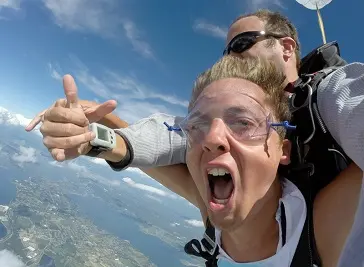 Source www.whatsoninnewyorkstate.com
Choosing Your Dropzone: Top Skydiving Centers in NYS
When you're ready to take the plunge, picking the right skydiving center, or "dropzone" as we call them, is super important for a fantastic experience in New York State.
You want a place with a stellar reputation, experienced instructors, and breathtaking views, because let's be honest, those Instagram-worthy moments are a big part of the fun.
New York offers several incredible spots where you can literally jump out of a perfectly good airplane and float back down to Earth.
These centers are regulated and adhere to strict safety standards, ensuring your jump is not just thrilling but also incredibly safe.
They often boast diverse amenities, from comfortable waiting areas to professional videography services so you can relive every exhilarating second.
Each dropzone has its own unique charm, whether it's the specific aircraft they use or the stunning landscape you'll be soaring over.
Here’s a quick look at some popular choices to help you decide where to make your unforgettable leap:
| Dropzone Name | Location | Key Highlight | Typical Jump Altitude |
|---|---|---|---|
| Skydive Long Island | East Moriches, Long Island | Coastal views of the Hamptons and Atlantic Ocean. | 10,000 - 13,500 feet |
| Skydive the Ranch | Gardiner, Hudson Valley | Scenic views of the Shawangunk Mountains and surrounding farmlands. | 13,500 feet |
| Skydive Finger Lakes | Ovid, Finger Lakes Region | Beautiful perspective of the Finger Lakes and vineyards. | 10,000 - 14,000 feet |
| Skydive Central New York | Fulton, Central NY | Overlooks Lake Ontario and vast upstate landscapes. | 10,000 - 13,500 feet |
Before you book, it's always a good idea to check out their websites, read recent reviews, and maybe even give them a call.
Ask about availability, group discounts, and any specific requirements they might have for jumpers.
You're investing in an experience of a lifetime, so make sure it's with a place that resonates with your adventure spirit.
What to Expect on Your First Jump: A Step-by-Step Guide
So, you've booked your jump, and now the butterflies are really starting to flutter.
Don't worry, that's completely normal.
Your first skydiving experience, almost certainly a tandem jump, is an incredibly structured and guided adventure designed to ensure maximum thrill with ultimate safety.
It all begins the moment you arrive at the dropzone, usually a few hours before your scheduled jump time.
First up, you’ll go through registration and some important paperwork, including waivers.
This is standard procedure and ensures everyone understands the risks and responsibilities involved.
After that, you’ll meet your tandem instructor, who will be your friendly guide throughout this incredible journey.
They're highly experienced professionals, often with thousands of jumps under their belts, so you’re truly in good hands.
Your instructor will then lead you through a comprehensive ground briefing.
This session covers everything you need to know: how the equipment works, what position to hold during freefall, how to help with the landing, and general safety protocols.
It's usually a relaxed yet informative chat, designed to make you feel comfortable and confident.
You’ll also get fitted into your harness, which attaches securely to your instructor.
Next comes the exciting part: boarding the aircraft.
You'll join your instructor and other jumpers, and as the plane climbs to altitude, typically between 10,000 and 14,000 feet, the views below will become absolutely stunning.
The door will open, and that's your cue.
Attached firmly to your instructor, you’ll shuffle towards the edge, take a deep breath, and leap into the boundless sky.
The freefall itself lasts anywhere from 30 to 60 seconds, a breathtaking rush of wind and pure adrenaline as you plummet towards Earth at around 120 mph.
Then, your instructor deploys the parachute, and suddenly, everything goes quiet.
You'll gently float, enjoying a peaceful canopy ride for about 5-7 minutes, taking in the panoramic vistas of New York State.
Your instructor will guide you in for a smooth landing, usually back at the dropzone.
Get ready for an epic high-five and a feeling of immense accomplishment!
Safety First: Understanding Skydiving Regulations and Training
When people think about skydiving, safety is often the first concern that pops into their minds.
And rightly so!
While it's an extreme sport, skydiving is incredibly safe, thanks to rigorous regulations, advanced technology, and highly trained professionals.
In New York State, as across the entire United States, skydiving operations are strictly governed by the Federal Aviation Administration (FAA).
The FAA sets forth comprehensive rules regarding equipment maintenance, aircraft operations, and instructor certification.
This ensures that every piece of gear, from parachutes to altimeters, is regularly inspected and in perfect working order.
Aircraft used for skydiving are also subject to strict maintenance schedules, much like commercial airplanes, making sure they are always airworthy and reliable for every ascent.
Beyond federal regulations, professional skydiving organizations like the United States Parachute Association (USPA) play a massive role in upholding safety standards.
Most reputable dropzones in New York are USPA affiliates, meaning they adhere to an additional layer of best practices and training protocols.
This includes mandatory instructor ratings, advanced training for pilots, and specific procedures for all types of jumps.
Your tandem instructor, for example, isn't just someone who decided to jump out of a plane yesterday.
They typically have hundreds, often thousands, of jumps under their belt, along with extensive training and certifications.
They are experts in their field, capable of handling various situations and ensuring your comfort and safety throughout the entire experience.
They are your personal safety net in the sky.
Equipment reliability is also paramount.
Modern skydiving gear includes a main parachute, a reserve parachute, and an Automatic Activation Device (AAD).
The AAD is a tiny computer that automatically deploys the reserve parachute if a jumper is still falling at a certain altitude and speed, acting as a final safeguard.
This multi-layered approach to safety means you can truly relax and enjoy the incredible thrill of soaring through the skies above New York.
Beyond the First Jump: Solo Skydiving and Advanced Training
So, you’ve done your tandem jump, and that incredible rush has left you craving more.
Congratulations, you've likely caught the skydiving bug!
For many, the tandem experience is just the beginning of a lifelong passion.
If you're dreaming of solo freefall, maneuvering your own canopy, and becoming a licensed skydiver, New York State dropzones offer excellent training programs to help you achieve those goals.
The most common path to becoming a solo skydiver is through the Accelerated Freefall (AFF) program.
This is an intensive, progressive training course designed to teach you all the necessary skills for safe, independent skydiving.
Unlike a tandem jump where you're attached to an instructor, in AFF, you'll be wearing your own parachute system from day one.
However, you won't be alone in the sky.
During your initial AFF jumps, two highly experienced instructors will be right there with you in freefall, holding onto your harness.
They provide real-time coaching and ensure your stability and safety as you practice various maneuvers, like altitude awareness, body position, and parachute deployment.
As you progress through the levels, typically eight to ten jumps, you'll gradually gain more independence.
Once you successfully complete the AFF program, you'll move on to supervised solo jumps and eventually qualify for your A-License, issued by the United States Parachute Association (USPA).
This license allows you to jump unsupervised at most dropzones worldwide.
It's a huge milestone that opens up a whole new world of skydiving possibilities, including group jumps, advanced canopy piloting, and even competitive skydiving.
Many licensed skydivers continue their training, earning B, C, and D licenses, which come with increasing privileges and responsibilities.
New York's skydiving community is vibrant and welcoming, offering opportunities to connect with fellow enthusiasts, participate in events, and continue learning new skills.
From perfecting your freefall maneuvers to exploring different parachute disciplines, the journey in skydiving is truly endless and incredibly rewarding.
Frequently Asked Questions About Skydiving in NYS
It's perfectly normal to have a ton of questions swirling around when you're thinking about skydiving, especially for the first time.
We've gathered some of the most common inquiries to help ease your mind and get you ready for your ultimate adventure in the New York skies.
Read through these, and you'll be even better prepared for your jump!
Is there a weight limit for skydiving in New York State?
Yes, most dropzones have a weight limit, typically around 220-240 pounds, though this can vary.
It's crucial to check with your chosen dropzone directly, as there might be height-to-weight ratios or additional fees for jumpers over a certain weight.
This is purely for safety and equipment limitations.
How old do I need to be to skydive in NYS?
You must be at least 18 years old to skydive in the United States, including New York, regardless of parental consent.
This is a strict FAA and USPA regulation, so make sure to bring a valid ID.
Do I need any prior experience to do a tandem skydive?
Absolutely not!
Tandem skydiving is specifically designed for first-timers with no prior experience.
Your experienced instructor handles everything, allowing you to simply enjoy the ride and the incredible views.
What should I wear for my skydive?
Comfortable, athletic clothing is best.
Think jeans, shorts, or track pants, and a t-shirt or long-sleeved shirt depending on the weather.
Sneakers or flat-soled shoes are essential; no open-toed shoes, sandals, or boots with hooks.
Can I wear my glasses or contact lenses?
Yes, you can.
Goggles are provided and fit over most glasses, protecting your eyes during freefall.
If you wear contacts, they should be fine too; just let your instructor know.
What if the weather is bad on my scheduled jump day?
Skydiving is highly weather-dependent.
If there are strong winds, rain, or low clouds, your jump will be rescheduled for safety reasons.
Always call the dropzone if you're unsure about the weather conditions.
How long does the entire skydiving experience take?
While the jump itself is quick, expect to spend half a day, or even a full day, at the dropzone.
This allows for registration, briefing, waiting for weather, and celebrating your jump afterwards.
Will I feel like I'm falling?
It's more like floating or flying than falling.
The rush of wind against your body creates an aerodynamic cushion, giving you a sensation of incredible speed but not the stomach-dropping feeling you might expect.
Can I breathe easily during freefall?
Yes, you can!
You'll be breathing normally, just like you are on the ground.
The wind might make it feel a little different, but it's completely natural and easy to breathe.
Is skydiving scary?
A little bit of nervousness or fear is completely normal and part of the excitement!
Most people describe it as an adrenaline rush mixed with pure exhilaration.
The scariest part for many is often the moment just before you jump out of the plane.
Can my friends and family watch me jump?
Most dropzones have designated spectator areas where friends and family can watch you take off and land.
It's a great way to share the excitement, so definitely invite them along!
Can I bring my own camera or phone on the jump?
For safety reasons, personal cameras, including GoPros attached to your helmet or wrist, are generally not allowed for tandem students.
This is to prevent accidental deployment or distraction.
Professional videography services are usually available.
What happens if the main parachute doesn't open?
This is an incredibly rare occurrence, but skydivers are trained for it.
Every skydiving rig has a main parachute and a reserve parachute.
Your instructor is highly skilled in deploying the reserve if needed.
Modern rigs also have an Automatic Activation Device (AAD) as a final backup.
Do I need to tip my instructor?
Tipping is not mandatory but is certainly appreciated if you feel your instructor provided an excellent experience.
It's similar to tipping in other service industries, a way to show your gratitude for their expertise and guidance.
What should I do after my skydive?
Celebrate!
You've just accomplished something incredible.
Many dropzones have areas to relax, grab a snack, and watch other jumpers.
You'll likely be buzzing with adrenaline and a huge sense of achievement for hours, so soak it all in and tell everyone about your amazing experience!
Ready for Your Own Adventure?
So there you have it – a glimpse into the incredible world of skydiving across New York State. Whether it's the sweeping views of the Hudson Valley or the unique perspective of the Adirondacks, it's an experience that truly sticks with you. We really hope you enjoyed tagging along on this virtual journey through the clouds, and maybe even felt a little bit of that adrenaline yourself! Thanks so much for dropping by and reading with us today. We've got plenty more exciting stories and tips waiting, so do swing back and visit us again soon. Until then, keep those eyes on the skies!