Jumping Over the Great Barrier Reef: It's Even Better Than It Sounds
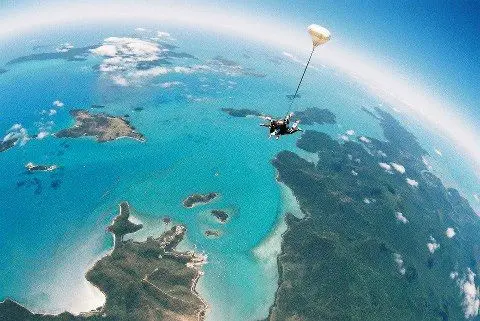
Ever dreamed of seeing the world from a truly mind-blowing perspective? Imagine this: you're thousands of feet up, the wind is rushing past, and beneath you, the vibrant blues and greens of the Great Barrier Reef stretch out as far as the eye can see. If leaping from a plane to witness this natural masterpiece sounds like your kind of thrill, then buckle up, because skydiving over the GBR is an experience you won't soon forget.
 Source www.pinterest.com
Planning Your Ultimate Skydive Adventure Over the Reef
So, you're ready to take the plunge and witness the Great Barrier Reef from an unbelievably unique perspective! That's fantastic! Planning your skydive adventure doesn't have to be complicated, but a little preparation goes a long way to ensure you have the most exhilarating and seamless experience possible. It’s all about making sure every detail is sorted so you can just focus on the thrill.
Booking in advance is always a smart move, especially during peak travel seasons when spots fill up quickly. Many operators offer flexible booking options, which is great if your travel plans are still a little fluid. Don't forget to check their cancellation policies too, just in case something unexpected pops up.
Consider what time of day you'd like to jump. Early morning jumps often offer calmer weather and stunning sunrise views, while afternoon jumps can provide a different kind of light hitting the reef. Think about the views you want to capture in your memory, and potentially on camera, as this can influence your preferred slot.
Also, think about what else you want to do around your skydive. This area is packed with incredible attractions, from exploring the Daintree Rainforest to diving into the reef itself. Integrating your skydive into a broader itinerary can make your trip even more epic.
Here's a quick guide to help you get started with the planning:
| Aspect | Details to Consider |
|---|---|
| Best Time to Book | As early as possible, especially for peak season (June-October). Spontaneous bookings might be possible but risk limited availability. |
| What to Bring | Comfortable clothing, closed-toe shoes, sunglasses, a valid ID, and your sense of adventure! Don't forget any required payment or booking confirmations. |
| Duration of Experience | Allow 3-4 hours from check-in to completion, though the freefall itself is just a minute. The whole process is designed to be fun and informative. |
| Weather Considerations | Skydiving is weather-dependent. Operators prioritize safety, so be prepared for potential rescheduling if conditions aren't ideal. They'll keep you updated. |
| Photography/Video Packages | Highly recommended! Decide if you want a handcam video, an outside camera flyer, or both, to capture those unforgettable moments forever. This is truly a once-in-a-lifetime view. |
Ultimately, planning your skydive over the Great Barrier Reef is part of the excitement. It’s about building anticipation for an experience that you'll be talking about for years to come. Get ready for an adventure of a lifetime.
What to Expect on Skydive Day: From Briefing to Landing Bliss
The day has finally arrived! You’re buzzing with a mixture of nerves and pure excitement, and that's perfectly normal. When you arrive at the drop zone, the friendly team will greet you and start with the check-in process. This usually involves some paperwork, including a declaration that you understand the risks involved, which is standard procedure for any adventure sport.
Next up, you'll meet your tandem master. This is the person you'll be securely strapped to, and they are highly experienced professionals whose job it is to ensure your safety and make sure you have an incredible time. They'll walk you through a detailed safety briefing, explaining what will happen at each stage of the jump.
They’ll cover everything from how you’ll exit the plane to the best body position for freefall, and what to expect during the parachute ride. Don't be afraid to ask any questions you have; they're there to put your mind at ease. This briefing is super important for everyone involved.
Once you’re geared up in your jumpsuit and harness, feeling like a true adventurer, it’s time to head to the plane. The scenic flight up to altitude is an experience in itself. As the plane climbs, you’ll get breathtaking aerial views of the coastline, the lush rainforest, and, of course, the stunning blues and greens of the Great Barrier Reef stretching out beneath you.
The anticipation builds with every foot of altitude gained. When you reach your jumping height, typically around 14,000 feet, the door will open. That's when the real magic begins. You'll shuffle to the edge of the plane, tandem master securely behind you, and then, you launch yourselves into the sky!
The initial rush of freefall is absolutely incredible – a pure adrenaline surge like no other. You’ll be soaring through the air at around 200 km/h, with the wind roaring past you, but surprisingly, it feels more like floating than falling. The views of the reef from this height are simply unparalleled, an endless panorama of natural beauty.
After about 60 seconds of exhilarating freefall, your tandem master will deploy the parachute. Suddenly, everything slows down, and you’ll gently glide through the air, taking in the serene beauty of your surroundings. The parachute ride is a chance to really soak in the views, chat with your tandem master, and maybe even steer the parachute yourself for a bit!
The landing is usually soft and smooth, right back at the drop zone. Once your feet are back on solid ground, the feeling of accomplishment and euphoria is immense. You've just skydived over one of the world's most iconic natural wonders! It's an experience that stays with you long after the adrenaline fades.
Capturing the Moment: Photos and Videos of Your Reef Skydive
You're about to embark on an experience of a lifetime, a skydive over the majestic Great Barrier Reef. Trust us, you'll want to relive every single moment, and more importantly, show off your incredible adventure to friends and family. That's where professional photo and video packages come in handy. They are seriously worth considering to forever document your epic leap.
Most skydive operators offer various options to capture your jump. The most common is a handcam video and photo package, where your tandem master wears a camera on their wrist. This captures fantastic close-up shots of your face, your reactions, and the incredible views from your perspective as you freefall and then glide under the canopy.
Another popular choice is having an outside camera flyer. This is a separate, highly skilled skydiver who jumps alongside you, capturing wide-angle shots of your freefall from a third-person perspective. Imagine seeing yourself soaring through the sky with the vibrant reef below – it’s truly spectacular and offers a different, more cinematic angle of your jump.
Some packages even combine both options, giving you the ultimate memento of your skydive. This way, you get the intimate, close-up reactions alongside the breathtaking wide shots of you against the backdrop of one of the world's natural wonders. It’s like having your own personal film crew documenting your adventure.
It's a good idea to decide on your preferred package before your jump day, or at least before your briefing. This helps the crew organize the camera flyers and ensures everything is set up to capture your experience exactly how you want it. Trust us, once you’re back on the ground, you'll be so glad you made the investment.
The photos and videos are usually ready soon after your jump, often within the same day. You’ll receive them on a USB stick or through a digital download link, making it super easy to share your adventure on social media or keep as a personal treasure. These aren't just pictures; they're memories that will last a lifetime.
Having these visual keepsakes means you can relive the rush, the awe, and the sheer joy of your skydive over the Great Barrier Reef whenever you want. It's an incredible way to share your story and inspire others to take the leap too. Don't let these precious moments simply fade into memory; capture them forever!
Safety First: Trusting Your Skydive Team and Equipment
When you're thinking about jumping out of a perfectly good airplane, it's completely natural to have questions and concerns about safety. Rest assured, the skydiving industry, especially in a place as renowned as the Great Barrier Reef, operates under extremely strict safety regulations and protocols. Your safety is, without a doubt, the number one priority for every skydive operator.
All tandem masters are highly experienced and certified professionals. They undergo rigorous training and continuous evaluations to maintain their qualifications. Many have thousands of jumps under their belts, making them seasoned experts who know exactly how to handle any situation. You are literally in the safest hands possible.
The equipment used for tandem skydiving is state-of-the-art and meticulously maintained. Each harness, parachute, and safety device is regularly inspected, serviced, and replaced according to stringent industry standards. There’s a main parachute, and crucially, a reserve parachute, both packed by certified professionals.
Furthermore, all modern tandem rigs are equipped with an Automatic Activation Device (AAD). This clever piece of technology is a tiny computer that constantly monitors altitude and descent rate. If, for any reason, the main parachute isn't deployed by a certain altitude, the AAD will automatically deploy the reserve parachute.
Before your jump, you’ll receive a comprehensive safety briefing. This isn't just a formality; it’s an essential part of the process designed to educate you on what to expect and how to respond during the skydive. They'll cover everything from body position to communication signals, ensuring you feel confident and prepared.
Weather conditions are also a critical factor. Skydiving is a weather-dependent activity, and operators will never jump if conditions are deemed unsafe, such as high winds, heavy rain, or low cloud cover. They always put safety before schedule, even if it means rescheduling your jump for another day.
Choosing a reputable skydive operator is key. Look for those with strong safety records, positive reviews, and proper certifications. In Australia, skydiving operations are closely regulated, providing an extra layer of assurance for adventurers like yourself. You can jump with confidence knowing everything is in place to ensure a safe and thrilling experience.
So, while the thought of freefalling might seem daunting, remember that you’re entrusting yourself to a highly regulated industry, skilled professionals, and top-tier equipment. Focus on the incredible experience ahead, knowing that every measure has been taken to ensure your jump over the Great Barrier Reef is as safe as it is spectacular.
Skydive Great Barrier Reef: Your FAQs Answered
Thinking about taking the ultimate leap over the Great Barrier Reef? That's awesome! It’s completely normal to have a few questions bubbling up before such an epic adventure. We've put together some frequently asked questions to help put your mind at ease and get you even more excited for your skydiving experience.
Q1: Is there a weight limit for skydiving?
Yes, most skydive operators have a weight limit for safety reasons, typically around 100-110 kg (220-240 lbs). There might be surcharges for individuals over a certain weight. It's always best to check with your chosen operator when booking, as limits can vary slightly.
Q2: Do I need any previous skydiving experience?
Absolutely not! Tandem skydiving is specifically designed for first-timers. You'll be securely harnessed to an experienced instructor who handles all the technical aspects, allowing you to simply enjoy the thrill and the incredible views without any prior experience.
Q3: What should I wear for my skydive?
Wear comfortable, casual clothing that allows for freedom of movement, such as shorts, t-shirts, or track pants. Closed-toe shoes (like sneakers) are essential. Avoid sandals, heels, or boots. You’ll be given a jumpsuit to wear over your clothes.
Q4: How old do I need to be to skydive?
In Australia, the minimum age for skydiving is typically 16 years old. If you're under 18, you'll generally need parental or guardian consent, which often involves them signing a waiver in person at the drop zone.
Q5: Can I bring my own camera or phone for photos/videos?
For safety reasons, personal cameras and phones are not permitted during the skydive. This is to prevent them from becoming a projectile during freefall. Professional photo and video packages are available to capture your experience.
Q6: How long does the entire skydiving experience take?
You should generally allow half a day for the entire experience, usually around 3 to 4 hours from check-in to completion. This includes paperwork, briefing, the scenic flight, the jump, and receiving your photos/videos.
Q7: What if the weather is bad on my jump day?
Skydiving is weather-dependent. If conditions are unsafe (e.g., strong winds, heavy rain, low cloud), your jump will be rescheduled. Operators prioritize safety and will contact you to arrange an alternative time.
Q8: Will I feel sick during the skydive?
While some people might feel a bit queasy, most jumpers don't experience motion sickness. The feeling of freefall is more like floating than falling, and the parachute ride is generally smooth. It's a good idea to eat a light meal beforehand.
Q9: How high do you jump from?
Most tandem skydives over the Great Barrier Reef are from altitudes of up to 15,000 feet (approximately 4,500 meters), offering over a minute of exhilarating freefall. Lower jumps (e.g., 10,000 feet) may also be available.
Q10: What does freefall feel like?
Freefall is an incredible sensation! It's often described as flying or floating on a cushion of air, rather than a stomach-dropping sensation. The rush of wind is intense, but the views are utterly mesmerizing. It's truly unique.
Q11: How long is the freefall and parachute ride?
From 15,000 feet, you'll experience about 60-70 seconds of exhilarating freefall. After the parachute deploys, the scenic canopy ride lasts for 5-7 minutes, giving you plenty of time to soak in the incredible reef views.
Q12: Can I breathe during freefall?
Yes, absolutely! Despite the high speed and rushing wind, you can breathe normally during freefall. Just remember to take deep breaths and enjoy the moment. Some people find it helps to let out a good yell!
Q13: Is skydiving over the Great Barrier Reef safe?
Yes, skydiving is a highly regulated adventure sport with an excellent safety record. All equipment is regularly inspected, and instructors are highly qualified. Safety is the top priority for all accredited operators.
Q14: What if I'm scared or nervous on the day?
It's completely normal to feel nervous! Most people are. Your tandem master is an expert at making you feel comfortable and confident. Focus on the incredible experience ahead and trust in the professionals. The nerves usually vanish the moment you exit the plane.
Q15: Can I get photos and videos of my jump?
Yes, definitely! All skydiving operators offer professional photo and video packages to capture your unforgettable experience. These are highly recommended, as they allow you to relive and share your incredible skydive over the Great Barrier Reef for years to come.
Thanks for Flying By!
Phew! What an adventure, right? Whether you're now dreaming of your own tandem jump over those incredible reef colours or just enjoyed the ride from your couch, we really appreciate you taking the time to read along. Thanks so much for flying by our little corner of the internet today. We've got plenty more incredible experiences and travel tales coming your way, so don't be a stranger – we'd love to have you back for another read very soon!